

Emerging markets continue to sit at the center of global economic transformation. While advanced economies still dominate in financial infrastructure and global currency influence, the real momentum in long-term growth is increasingly coming from developing regions. From Asia’s manufacturing powerhouses to parts of Latin America and Africa, the performance gap between the strongest and weakest emerging economies is widening, creating a more fragmented but opportunity-rich global landscape.
Recent forecasts and economic indicators show a clear pattern: emerging markets diverging into leaders, mid-tier performers, and laggards shaped by domestic demand, political stability, resource exposure, and technological adoption.
A Two-Speed World
One of the most important shifts in the global economy is the growing divergence within emerging markets themselves. According to global economic projections, developing economies overall are still expected to grow faster than advanced economies, but growth is uneven across regions and countries.
Some countries are accelerating due to strong domestic consumption, manufacturing expansion, and technology integration. Others are slowing under the weight of inflation, currency instability, debt burdens, and geopolitical risk.
This creates a “two-speed” system:
- High-growth emerging leaders driving global expansion
- Stagnating or fragile economies struggling to maintain stability
Understanding this divide is essential for interpreting where global opportunity is actually concentrated.
The Leaders
India
India remains one of the most consistently strong performers among large economies. Forecasts continue to place it as one of the fastest-growing major economies globally, supported by domestic demand, infrastructure expansion, and services exports.
Key drivers include:
- Expanding middle class consumption
- Government-led infrastructure investment
- Strong digital and services economy
- Increasing manufacturing relocation from China
Unlike many emerging markets that rely heavily on exports or commodities, India’s growth is increasingly domestically driven, making it more resilient to global trade shocks.
Southeast Asia
Countries such as Vietnam, Indonesia, Thailand, and the Philippines are benefiting from global supply chain diversification. As companies reduce reliance on China, Southeast Asia has become a key destination for:
- Electronics manufacturing
- Automotive supply chains
- Digital services outsourcing
This region is also seeing rising foreign direct investment as investors seek lower-cost, politically stable alternatives to traditional manufacturing hubs.
Africa
Africa’s growth story is highly uneven but structurally important. Some economies are benefiting from:
- Urbanization
- Mobile-first financial systems
- Natural resource exports
However, challenges such as infrastructure gaps, currency volatility, and debt servicing pressures continue to limit broader acceleration. The region’s performance varies widely between fast-growing hubs and heavily constrained economies.

Stable but Slowing Performers
A large group of emerging economies sits in a middle category, neither accelerating sharply nor collapsing, but facing structural constraints.
China
China remains central to global growth but is clearly transitioning into a slower, more mature phase. Growth targets have been moderated toward the mid-single-digit range, reflecting structural headwinds such as:
- Property market weakness
- Demographic aging
- Export dependency shifts
- Regulatory tightening in key sectors
While China still plays a dominant role in global manufacturing and trade, its era of double-digit expansion is over. The focus is now on stability rather than rapid acceleration.
Latin America
Latin American economies remain heavily tied to commodity cycles and external financing conditions. Growth in the region is expected to moderate in 2026, reflecting weaker investment and higher debt constraints.
Key characteristics include:
- Dependence on exports like oil, metals, and agriculture
- High sensitivity to global interest rates
- Structural fiscal constraints in several countries
While countries like Brazil offer scale and agricultural strength, broader regional performance is limited by policy volatility and inflation sensitivity.
Fragile Economies Under Pressure
At the lower end of the emerging market spectrum are economies struggling with macroeconomic instability. These include several countries in parts of South Asia, the Middle East, and Sub-Saharan Africa.
Common challenges include:
- Currency depreciation and capital flight
- High inflation and food insecurity
- Heavy reliance on energy imports
- Weak fiscal positions and rising debt burdens
Recent geopolitical disruptions and energy price shocks have intensified these pressures, particularly for import-dependent economies.
In these environments, even modest external shocks, such as oil price spikes or capital outflows, can significantly disrupt growth trajectories.
What’s Driving the Performance Gap?
Several structural forces explain why emerging markets are diverging so sharply:
Capital Flows Are Concentrating
Global investment is increasingly selective. Capital is flowing toward countries with:
- Stable governance
- Large domestic markets
- Strong digital infrastructure
This benefits countries like India and Vietnam while leaving smaller, riskier economies behind.
Technology Adoption Is Uneven
Digital transformation is a major growth accelerator, but adoption rates vary widely. Economies that integrate AI, automation, and digital payments into their systems are pulling ahead.
Emerging markets tied into global tech supply chains are also benefiting disproportionately, particularly in semiconductors and electronics manufacturing.
Debt and Interest Rate Sensitivity
Many emerging markets carry higher debt burdens in foreign currencies. As global interest rates remain elevated, refinancing becomes more expensive, limiting fiscal flexibility and slowing investment.
Commodity Dependence
Resource-rich countries often experience volatile growth tied to global commodity cycles. While high prices can boost revenues, downturns quickly expose fiscal weaknesses.
The Role of Global Trade Realignment
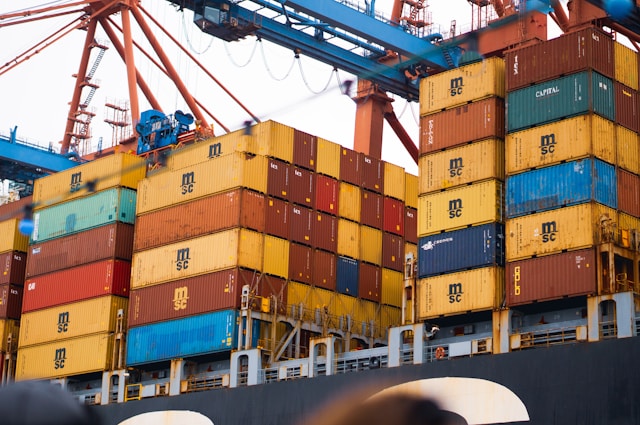
A major long-term driver reshaping emerging markets is the reorganization of global supply chains. Companies are increasingly adopting “China+1” or “China+many” strategies, spreading production across multiple countries.
This has created winners in:
- Southeast Asia (manufacturing expansion)
- India (industrial policy and domestic production incentives)
- Mexico (nearshoring to the U.S. supply chain)
At the same time, countries that fail to attract manufacturing investment risk falling further behind.
The Global Growth Picture
Despite internal divergence, emerging markets as a group remain critical to global economic expansion. Long-term projections suggest they will account for a majority share of global growth over the coming decades.
However, their influence is increasingly concentrated in a smaller group of outperforming economies rather than evenly distributed across the developing world.
What Investors and Policymakers Should Watch
The emerging market landscape is now defined less by broad regional exposure and more by country-level selection.
Key indicators of future leadership include:
- Domestic consumption strength
- Inflation control and monetary stability
- Integration into global supply chains
- Political and regulatory predictability
- Investment in infrastructure and technology
Countries that perform well across these dimensions are likely to continue leading the growth rankings.
A Fragmented but Opportunity-Rich Future
Emerging markets are no longer a uniform growth story. Instead, they represent a complex hierarchy of fast-moving leaders, stable but slowing middle performers, and structurally challenged laggards.
The result is a global economy where opportunity is more concentrated, but also more dynamic. Growth is no longer defined by geography alone, but by policy choices, technological integration, and the ability to adapt to global economic realignment.
In the coming years, the question will not simply be whether emerging markets grow, but which ones lead and which ones are left behind.