

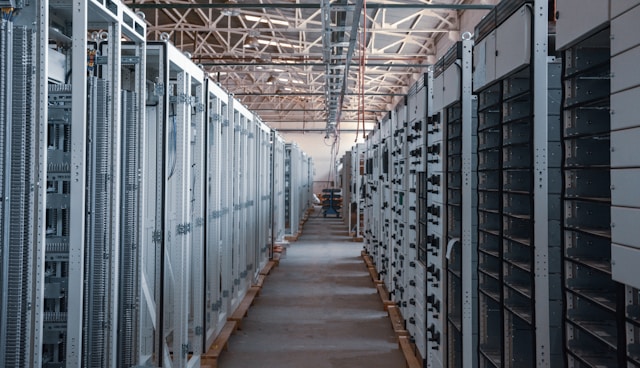
Across the United States, data centers have rapidly evolved from niche infrastructure projects into some of the most economically significant and politically contested development drivers in state economies. Fueled by artificial intelligence, cloud computing, and digital storage demand, the sector is now reshaping how states compete for investment, jobs, and long-term tax revenue.
At the center of this shift is a growing debate over tax incentives. States are offering billions in subsidies and exemptions to attract hyperscale data center operators, betting on long-term economic gains. But as construction accelerates, questions are emerging about whether these incentives deliver proportional returns or simply shift costs to taxpayers and utility ratepayers.
A New Kind of Industrial Policy
Unlike traditional economic development projects that rely heavily on labor-intensive manufacturing or logistics hubs, data centers operate on a fundamentally different model. They are capital-heavy, infrastructure-intensive facilities that generate relatively few permanent jobs compared to their physical footprint.
To attract these facilities, states have increasingly leaned on aggressive tax incentive packages, including exemptions on:
- Sales tax for computer equipment and servers
- Property taxes for specialized infrastructure
- Electricity-related usage taxes in some jurisdictions
- Construction materials and cooling systems
According to policy research groups, more than three dozen states now offer some form of dedicated tax incentive for data center development, making it one of the most widely subsidized sectors in the country.
This competitive environment has created a race among states to secure large-scale data center investments before neighboring jurisdictions do.
The Scale of Financial Incentives Is Expanding Rapidly
As demand for digital infrastructure grows, so too does the scale of public incentives. In several states, tax exemptions tied to data center development are now projected to reach into the billions of dollars over time.
For example, some estimates suggest that large-scale incentive programs could forgo billions in potential revenue over the life cycle of these facilities, particularly in states that aggressively market themselves as data center hubs.
These incentives are often justified on the basis that data centers will:
- Increase long-term property and ancillary tax revenue
- Drive construction-related employment
- Attract supporting tech ecosystems
- Strengthen local energy and fiber infrastructure
However, the return on investment remains a point of contention, particularly because the direct employment impact of data centers is relatively limited once construction is complete.
Energy Demand Is Now a Central Economic Factor
One of the most important shifts in the data center economy is the rising importance of electricity demand. Modern hyperscale facilities consume enormous amounts of power, sometimes comparable to small cities.
This has turned energy policy into a core component of economic development strategy.
States offering generous incentives are also often those investing heavily in grid expansion, transmission upgrades, and power generation capacity to support incoming demand. This creates a feedback loop where:
- Incentives attract data centers
- Data centers increase energy demand
- Utilities expand infrastructure
- Infrastructure costs are recovered through long-term rate structures
In many cases, these infrastructure costs are ultimately shared across the broader ratepayer base, raising concerns about indirect subsidies embedded in utility pricing.
The Economic Promise
Despite concerns over subsidies and energy costs, data centers still represent a major source of economic activity for many states.
Proponents argue that these facilities:
- Bring billions in private capital investment
- Support high-value construction and engineering jobs
- Strengthen state-level digital infrastructure
- Anchor long-term technology ecosystems
In regions competing for tech investment, landing a hyperscale data center project is often seen as a strategic win. It signals that a state has sufficient energy capacity, connectivity, and regulatory flexibility to support next-generation computing infrastructure.
States like Virginia, Texas, Georgia, and Arizona have emerged as leading hubs, each building clusters of facilities that reinforce their competitive position in the digital economy.
Growing Scrutiny Over Public Cost vs. Private Gain
As the industry scales, lawmakers and watchdog groups are increasingly questioning whether current incentive structures are sustainable.
Critics argue that:
- Tax exemptions significantly reduce state revenue
- Benefits are concentrated among large technology firms
- Job creation per dollar of incentive is relatively low
- Energy and infrastructure costs may be shifted to consumers
Some states are already reconsidering their approach, with legislative proposals aimed at scaling back or restructuring incentives to ensure better alignment with public returns.
In certain cases, policymakers are exploring “clawback” provisions or performance-based incentives that require companies to meet specific employment or infrastructure benchmarks.
Grid Expansion and Utility Pressure
Beyond direct tax incentives, one of the most significant economic impacts of data center growth lies in utility infrastructure.
To accommodate large-scale facilities, utilities often need to:
- Expand transmission capacity
- Upgrade substations and distribution networks
- Secure additional generation resources
- Reinforce grid reliability under peak demand
These upgrades require substantial capital investment, which is typically recovered over time through utility rates. As a result, both residential and commercial customers can experience indirect cost increases linked to data center expansion.
This dynamic has made energy affordability a growing political issue in several states where data center growth is concentrated.

A Competitive Landscape Reshaping State Economies
The data center boom is also reshaping interstate economic competition. States are no longer just competing for manufacturing plants or corporate headquarters, they are competing for digital infrastructure.
This competition is driving:
- Rapid zoning and permitting adjustments
- Specialized tax legislation for digital infrastructure
- Public-private partnerships in energy development
- Increased lobbying from both tech firms and utility providers
At the same time, some states are beginning to introduce stricter conditions around water usage, energy sourcing, and community impact before approving new developments.
Long-Term Economic Impact: Concentration vs. Diversification
Economically, data centers present a paradox. On one hand, they bring large-scale investment and strengthen digital infrastructure. On the other, they may concentrate economic benefits in fewer sectors while increasing reliance on capital-intensive industries with limited labor participation.
Over time, this could lead to:
- Higher but more concentrated tax bases
- Increased dependence on a small number of large corporate tenants
- Greater sensitivity to shifts in technology demand cycles
For state economies, the challenge will be balancing the short-term appeal of large investments with long-term diversification and fiscal stability.
The Future of Data Center Economics in the U.S.
The trajectory of data center growth suggests that the sector will remain one of the most important infrastructure categories in the digital economy. However, the policy environment surrounding it is clearly shifting.
Key trends to watch include:
- Gradual tightening of tax incentive programs
- Increased emphasis on energy efficiency requirements
- More public scrutiny of utility cost impacts
- Greater competition among states for “clean energy powered” facilities
As artificial intelligence and cloud computing continue to expand, demand for data centers is unlikely to slow. But the economic model underpinning their growth, particularly the role of public incentives, may be entering a period of significant recalibration.
A New Infrastructure Economy Is Taking Shape
Data centers are no longer just technology assets, they are becoming foundational components of state economic strategy. The question is no longer whether states want them, but how much they are willing to subsidize them, and who ultimately pays the price.
As incentives expand and scrutiny increases, the future of the data center economy will depend on finding a balance between competitiveness, fiscal responsibility, and long-term infrastructure sustainability.
In this emerging landscape, data centers are not just reshaping the internet, they are reshaping state budgets, energy systems, and the very structure of modern economic development.